
Closed Terrarium Care
Closed terrariums are low maintenance and very rewarding in the long term. They offer the perfect environment for plants to grow as they ensure that humidity stays trapped inside, similar to a mini greenhouse.
Most foliage houseplants available in the plant hobby come from tropical climates and prefer a high humidity in their environment which makes them perfect for closed terrariums.
In this comprehensive care guide we’ll be exploring how to look after closed terrariums and which plants are most suitable for them.
What plants are best for closed terrariums?
Before we even begin talking about plants, we always recommend thinking about the terrarium size because that will ultimately dictate what types of plants will be suitable.
If you’re planning on crafting a small piece, you should always research what plants will remain small or respond well to pruning. At some point, you will have to cut them back occasionally to stop them from taking over the whole space and competing for light and nutrients.
For the least amount of fuss, we always use plants that have slow to moderate growth speed. These will ensure that your terrarium stays in its intended shape and low maintenance. You always want to prepare in advance and craft with intention. Not only will this make the piece more special, but it will ensure it thrives in your home.
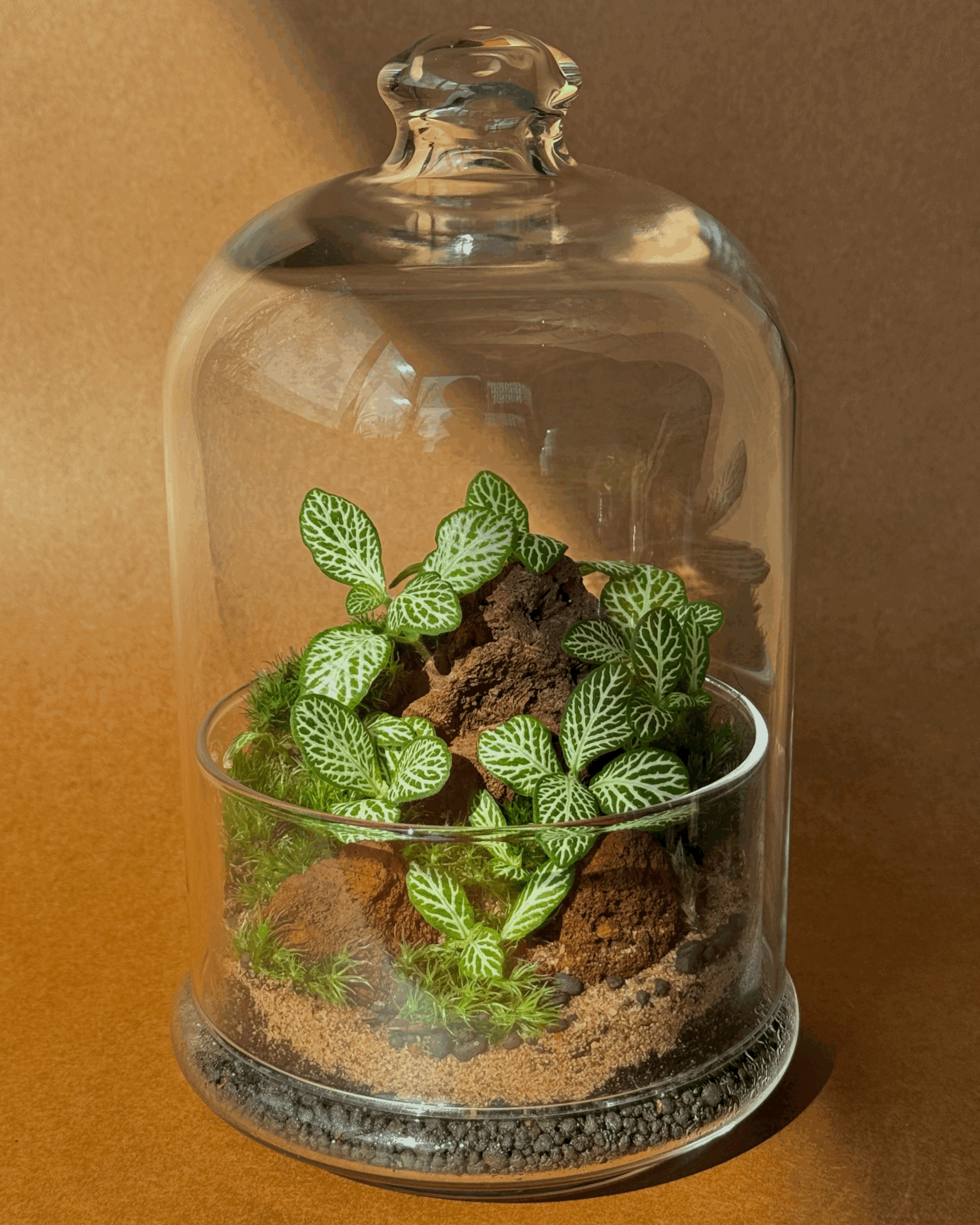
Creepers and Trailing plants
If you’re using a small terrarium vessel, we would recommend staying away from creeping plants, like Tradescantias, Callisias or anything similar. They may seem very attractive at first, but they grow incredibly fast and you’ll have to prune them very often. They are best suited in larger spaces, where they can naturally grow bushy and the pruning isn’t required as often.
Best Terrarium Size: Medium or Large
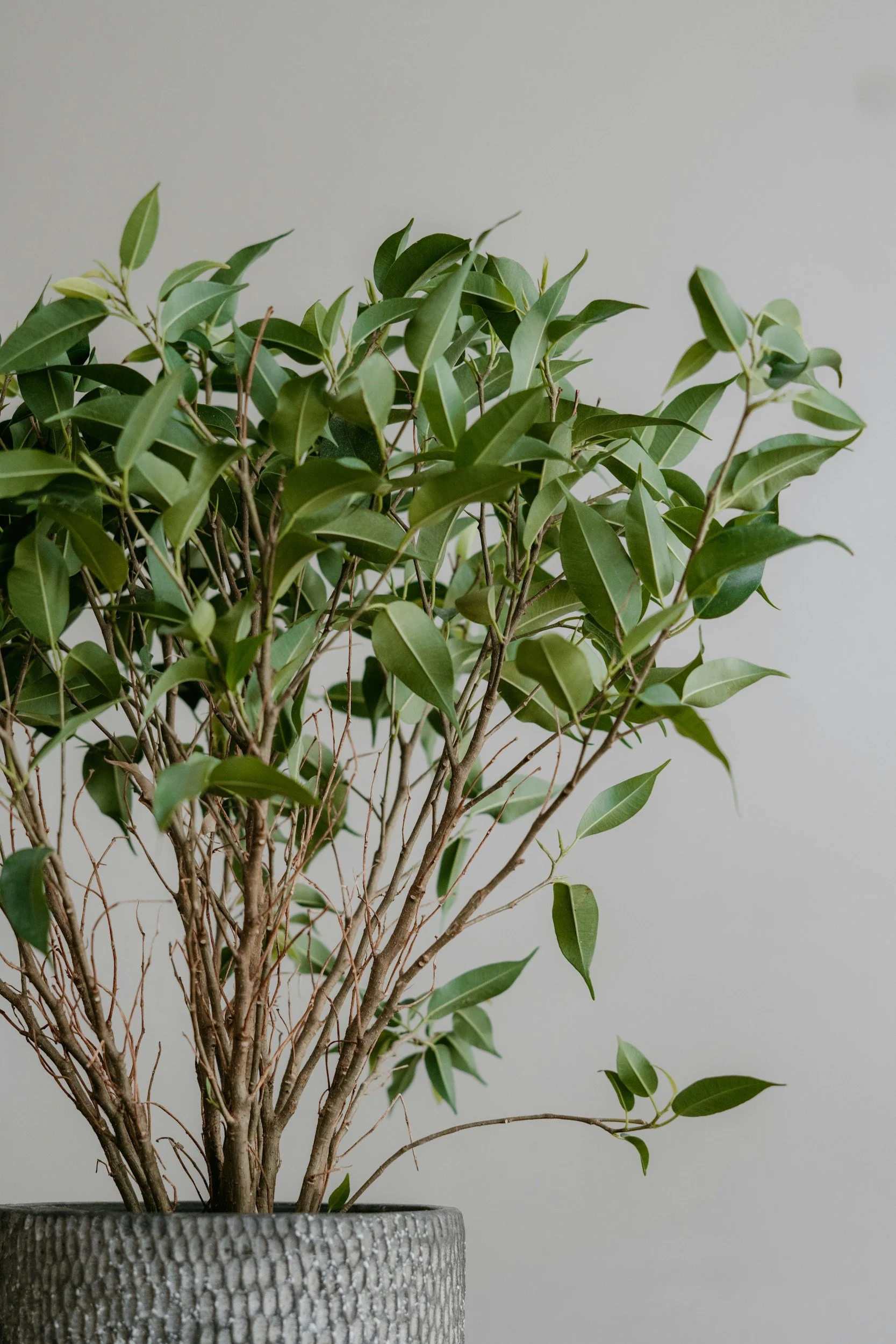
Ficus Benjamina
Small Trees
Little trees can be a great addition to a closed terrarium. They add so much character, but they come with specific care requirements and they’re not always suited for beginners. They will develop health issues much easier than other plant types, need stable environments and consistent care. Some of the most popular choices of small trees would be a Ficus Ginseng, Ficus Microcarpa and Ficus Benjamina. There are plenty others that would do well, but these generally respond best to closed terrariums.
Pruning is very important as it’s going to shape your small tree as it matures and slowly becomes a bonsai. Regular pruning encourages a bushier look, smaller leaves and thickening of the trunk and branches. To achieve the best shape you also want to give your tree plenty of space. So a terrarium of at least 30cm height would be ideal for proper development of canopy.
Soil quality and moisture is probably the trickiest part to get right when it comes to keeping trees in closed terrariums. It needs to be very well draining so air can circulate properly in the root area and allow any excess water to evaporate. If the soil is constantly wet it will almost certainly lead to root rot and fungal infections, particularly for the Ficus Ginseng.
Best Terrarium Size: Medium or Large
Fittonia
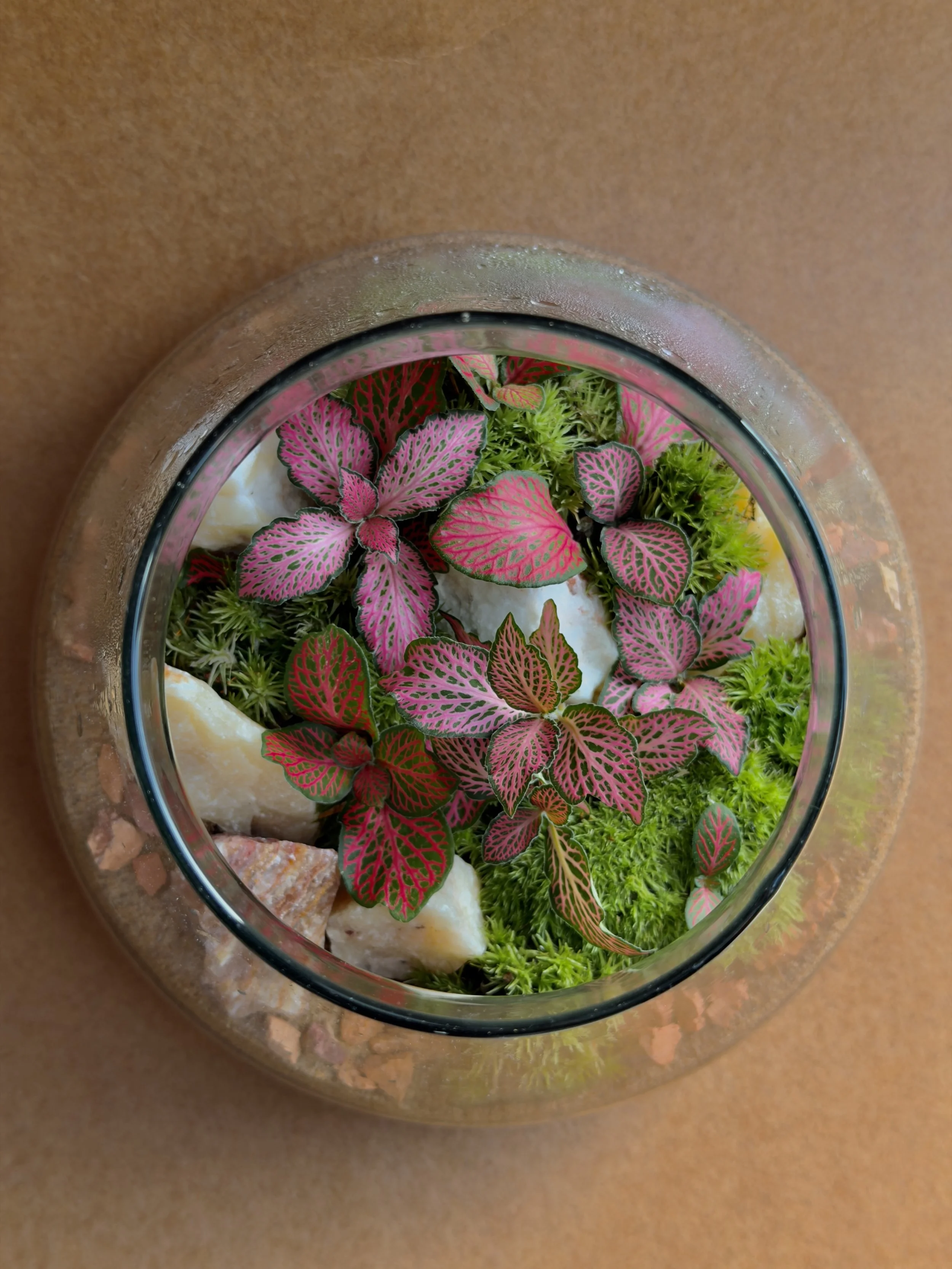
Fittonia or Nerve Plants are our favourite and we use them in most of our terrariums. They thrive in high moisture closed terrariums, grow at a slower pace than most plants (which means less maintenance) and come in such a wide variety of colours. They are easy to look after and propagate which means that with less you can make more. They do prefer a bright light for healthy growth so if you notice pale colours, leggy stems and small leaves that means your plants don’t have sufficient light.
Best Terrarium Size: Suitable for any size
Fittonia
Ferns
Ferns do best in environments with high humidity so it makes them the perfect choice for the closed terrariums. While that may sound appealing, you’ll have to know that ferns grow fast and big. A fern can take over your whole terrarium in a matter of months and pruning isn’t really an efficient option. Yes, you may cut back some of the leaves, but as they mature they will gradually get bigger. Even if your plant is small at the beginning, it will overgrow most small to medium sized terrariums. There are smaller or more manageable alternatives such as the Eye Lash Fern, as well as fern-like plants like Selaginella or compact growers like Pilea, so don’t be discouraged.
Best Terrarium Size: Medium or Large with exceptions
Begonia
Begonias love humidity and thrive in closed terrariums, but before you go ahead and get one for your new project you should definitely research its size at maturity. While there are some petite begonia varieties, most are still going to grow quite big which would make them suitable for medium to large sized terrariums. They come in a huge variety of colours and shapes and they even flower when healthy
Best Terrarium Size: Medium or Large with exceptions
The bottom line is that you should always research how big your plant will get at maturity. Think about your terrarium as a long lasting project. With proper care and maintenance they can live for many years to come.
General Terrarium Care Guidelines
Container Type
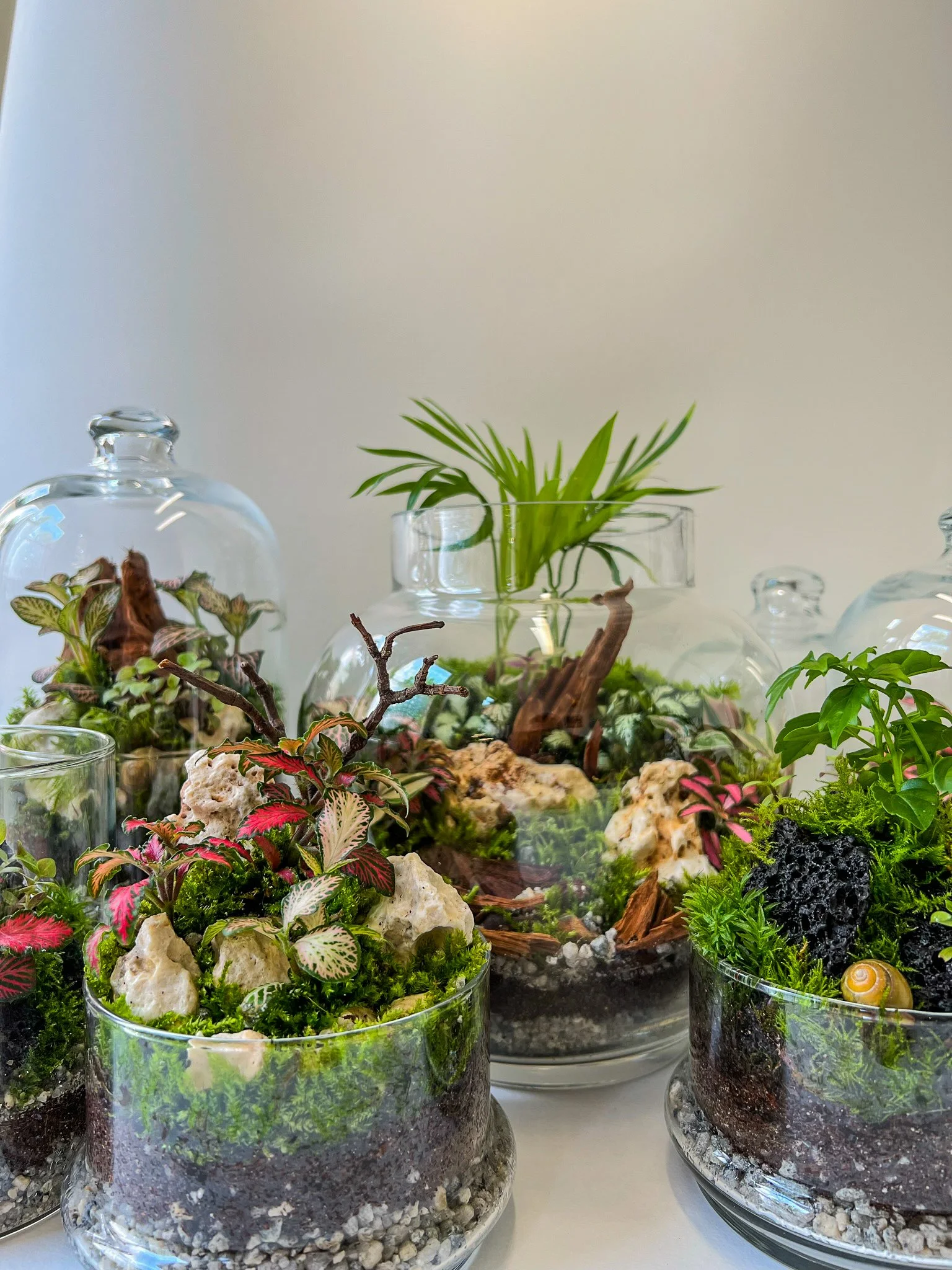
The type of container used for a closed terrarium can have a significant impact on how the internal environment behaves over time. While all closed terrariums aim to create a humid, stable ecosystem, different shapes and designs will influence airflow, condensation, and how often maintenance is required.
Fully sealed containers tend to retain the highest level of humidity, which reduces the need for watering but also makes the system slower to correct if something goes out of balance. In contrast, containers with a loose-fitting lid or small openings allow for minimal airflow, which can help reduce the risk of excessive moisture build-up and make the terrarium slightly more forgiving.
The shape of the container also plays a role:
Narrow-neck vessels can trap humidity very efficiently, but they are harder to access for pruning and maintenance
Wide-opening containers allow for easier access and better light distribution, but may lose moisture slightly faster
Glass clarity is another factor to consider. Clear, high-quality glass allows more light to reach the plants, supporting healthier growth. Over time, mineral deposits and residue from condensation can build up on the inside, so regular cleaning is important to maintain good light levels.
Ultimately, no single container type is “best,” but each will influence how frequently you need to intervene. Understanding how your container behaves will help you adjust watering, light placement, and general maintenance more effectively.
Light Requirements
• Place your terrarium in a spot that receives ample bright indirect light. This would be ideal for overall plant health.
• Keep your terrarium away from direct sunlight, especially harsh afternoon sun as that could scorch their delicate leaves. In a closed terrarium the temperature can build up similar to a Greenhouse effect, which does not only stress and damage the plants, but it could kill them altogether. A couple of hours under the hot summer sun can have devastating effects. A couple of hours of sunlight in the morning or late evening is generally fine, but we recommend keeping the terrariums under observation.
• Light influences the growth of your plants. In proper lighting conditions your plants will grow faster, healthier and develop vivid colours. Moderate or low light conditions are tolerated too, but as a result, your plant will grow much slower, leggy and the leaf size and colour would gradually diminish.
• Leggy growth generally happens when your plants don’t receive enough light and put all their efforts to grow closer to the light source. Pale colours and small leaves will also develop as a result of insufficient light. Colour is the first sign of a healthy plant, whether that’s green or any other. If you notice that your plants have started to be a little pale then that’s the first cue that the terrarium should be placed in a brighter stop. Now you might think that the terrarium looks cute in that shady corner, but in the long run you can end up not having one at all. We must always remember that plants are living organisms, and just like us, they have their own needs.
Watering Terrariums
In a closed terrarium the water is constantly being recycled. The plants absorb the water through their roots, process it then transpire it back into the closed environment. Then the humidity created transforms into condensation and drips back into the soil. Almost all water is being recycled, but that doesn’t mean that you’ll never have to water your terrarium or do any maintenance work. That will just be significantly reduced.

Fittonia Jar Terrarium with Cork Lid
In normal conditions, a closed terrarium is pretty much self-sustainable, but some water may be lost. You’ll end up watering your terrarium between 2-4 times a year depending on how bright or warm your space is. There is never a common rule that applies to all terrariums, but there are a few things to look out for when it comes to watering.
Make sure the soil is always moist, but not soggy. The soil should always have a darker colour when moist. If you notice it being a lighter colour, it means your terrarium needs a little water.
Another indicator would be the appearance of your moss (that’s if you have any in your terrarium of course). If the moss turns yellow that’s generally an indicator that it has dried out. Most varieties of moss will bounce back gradually after they’ve been watered, but bear in mind that it may take a little while. If your moss has turned brown, it’s likely dying and it could be a sign of either overwatering or not enough light (or a mix of both).
Condensation is not only normal, but also desired. It generally signifies sufficient humidity in the terrarium. If there is no condensation at all, it is likely too dry. If there’s too much condensation, you can wipe down the glass and remove the lid temporarily.
Soil
For a proper closed terrarium mix you would need to create a stable and slow-cycling ecosystem. Your goal is to have a structured, airy and biologically resilient soil. This will not only guarantee the longevity of your terrarium, but also a good root health. Before you go ahead and mix your own you must think about it differently: Soil in nature is a very complex ecosystem and you are trying to recreate exactly that.

Here’s a horticultural grade terrarium soil recipe:
30% Coconut Coir - moisture retention without going anaerobic
25% Fine Orchid Bark - creates air pockets and prevents soil compaction long term
15% Horticultural Charcoal or Biochar (a sustainable alternative to traditionally mined charcoal) - it keeps the system clean and provides the perfect microbial habitat for beneficial bacteria)
15% Pumice or Perlite - drainage and structural stability (pumice is preferred for longevity)
10% Worm Castings or Seedling Grade Compost - provides slow release nutrients without overfeeding
5-10% Sphagnum Moss - moisture regulation, root support, air pockets
What you should always avoid is houseplant compost alone. It compacts easily, doesn’t allow for proper air circulation, holds water for longer and suffocates the roots. Moreover, it can lead to bacteria blooms, fungal infections and mould.
The key rule is that your terrarium mix should always contain at least 60% of organic and mineral components that are meant to improve the soil drainage and aeration.
For overall soil health and healthy microbial colonies you should always water your terrarium with water that doesn’t contain any chlorine. If rainwater or distilled water aren’t an option for you, you should at least leave the tap water overnight to reduce the chlorine concentration.
Another alternative would be to treat your water. We recommend any water dechlorinator and you can find them in any aquatic shop or online for convenience.
Drainage Layer
A drainage layer is an essential part of any closed terrarium, as it directly affects how water behaves within the system over time. While this guide focuses on care, it’s important to note that many common issues, such as root rot, persistent soggy soil and unpleasant smell, are often linked to the absence of a proper drainage layer.
In a closed environment, excess water has nowhere to escape. A drainage layer acts as a reservoir where surplus moisture can collect, preventing the soil from becoming waterlogged and allowing the root zone to remain aerated.
For a terrarium to function properly long term, the soil should stay moist but never saturated. Without a drainage layer, even small amounts of overwatering can quickly lead to anaerobic conditions, which promote root rot and harmful bacterial growth.
If a lot of water accumulates in the drainage layer you should always remove the lid for a few days to ensure that it evaporates or remove it with a pipette or syringe. Similarly, if the soil is too wet, but there’s no water in the drainage, remove the lid for a few days and place your terrarium in a warmer, brighter spot.
Temperature
Temperature plays a crucial role in the long-term health of a closed terrarium, and it’s often overlooked. While the glass enclosure helps maintain humidity, it also traps heat, which means your terrarium can warm up much faster than the surrounding room.
Most plants used in closed terrariums come from tropical environments and generally prefer stable temperatures between 18–24°C. Short fluctuations are usually tolerated, but prolonged exposure to higher temperatures can cause stress and irreversible damage.
One of the biggest risks comes from heat build-up inside the container. Even if your room temperature feels comfortable, direct sunlight or a warm windowsill can quickly raise the internal temperature of a closed terrarium well beyond safe levels. This “greenhouse effect” can lead to overheating, causing plants to wilt, turn translucent, or die within a short period of time.
As a general rule:
Avoid placing terrariums in direct sunlight, especially during midday and afternoon hours
Keep them away from radiators, heaters, and other heat sources
Be cautious with windowsills, as temperatures can fluctuate significantly throughout the day
If you suspect your terrarium is overheating, you can temporarily remove the lid to allow excess heat to escape and help regulate the internal environment.
Maintaining a stable, moderate temperature will ensure your terrarium remains balanced and continues to thrive over time.
Essential Terrarium Maintenance
Pruning
A healthy terrarium needs to be pruned occasionally. There’s no debate about that. This practice ensures that your plants can coexist with each other without competing for light. Pruning also helps some plants grow bushier which will increase the character long term, particularly with plants like small trees or fittonia.
Cleaning
You should clean the terrarium glass regularly. The condensation can lead to dirt and mineral build up on the glass and that can diminish the amount of light that enters your terrarium.
Watering and Misting
Watering needs vary from one terrarium to another as much as it depends on the space it lives in. For best practice, keep an eye on the soil colour.
Misting is optional, but sometimes needed. Moss can benefit from regular misting and prevents it from drying up.
Mould
Mould is natural and it happens more often than you think. It is generally caused by bacterial blooms in your terrarium, but generally it will go on its own as your terrarium matures and builds healthy microbial colonies. Mould feeds off the decomposing organic materials and helps break things down in an ecosystem. If you want to prevent mould you can disinfect your materials prior to introducing them in a closed environment, but even that doesn’t always guarantee it.
Another way to combat mould would be to introduce a clean-up crew. Spring Tails are small invertebrates that feed on mould and the bacteria that appears on decomposing organic materials. And don’t worry about them escaping, they won’t cause any havoc in your house like Fungus Gnats. If they do manage to escape they will likely die shortly after. They’re basically tiny crustaceans that need high moisture environments to survive.
Springtails - optional
Just like previously mentioned, they feed off mould, but they are also one of the key contributors to soil health in nature. They help with cycling dead organic materials and the decomposition process.
Algae - optional
Algae is normal and expected at some point or another. It’s your choice whether you want to combat it or embrace it. Algae is generally a sign of maturity and a stable closed terrarium so why not let nature do its thing?
However, if you want to get rid of it, you can use a solution made of water and hydrogen peroxide. This generally cleans most of the algae after multiple applications, but be aware that hydrogen peroxide may damage the ecosystem and kill beneficial microbial colonies.
Tool Recommendations
Here are a few tools that would come in handy when owning a terrarium:
Long tweezers
Pipette or syringe - can be used for watering, dosing fertilisers or removing excess water from the terrarium
Spray bottle
Scissors or pruning shears - if your terrarium has a narrow opening we suggest getting some long aquascaping scissors to make pruning easier.
Brushes
A nozzle water bottle - makes watering and dosing much easier
Closed terrariums are self-sustaining ecosystems that, with the right care, can thrive for many years. Success comes down to understanding how light, moisture, temperature, and plant selection interact within a confined environment.
Choosing the right plants for your terrarium size, maintaining stable conditions, and making small adjustments over time are key to long-term health. Rather than frequent intervention, closed terrariums benefit from observation and patience, allowing the internal balance to establish naturally.
By focusing on proper plant choice, controlled watering, and consistent environmental conditions, you can create a resilient and low-maintenance terrarium that continues to develop and mature into a stable, self-sustaining ecosystem over time.
